
Matt Pindera | Originally Published: 24 January 2026
Kenny Holston/The New York Times
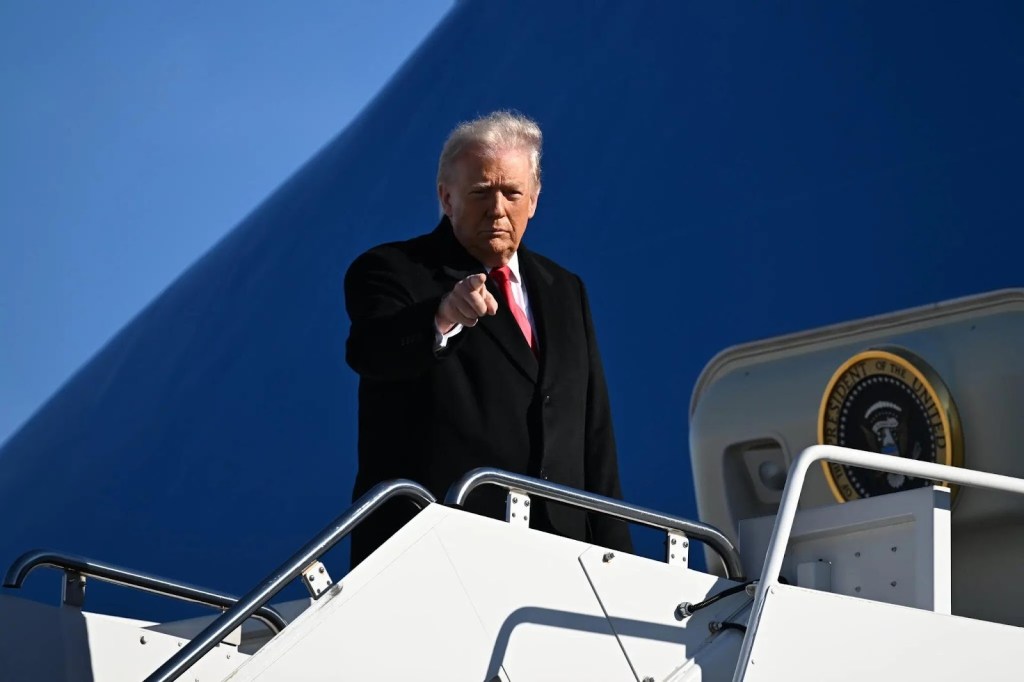
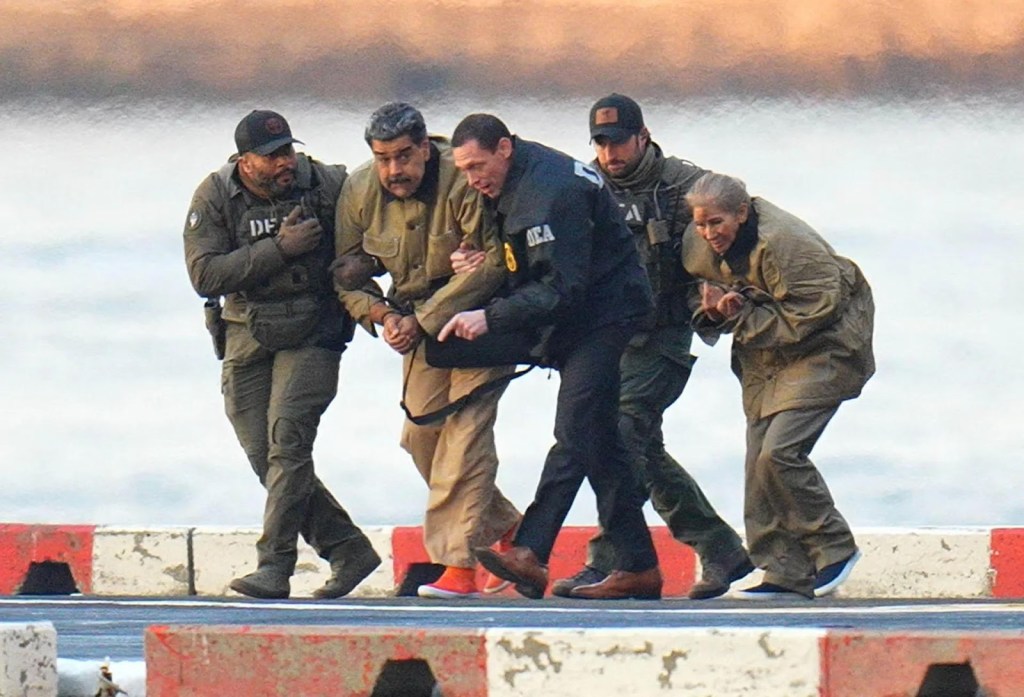
2025 turned into 2026, and three days later, the end of history was no longer. On January 3rd in the middle of the night, US President Donald Trump ordered air strikes into Caracas and the swift abduction of Venezuelan president Nicolas Maduro along with his wife, in what was truthfully one of the most stunning military operations in modern American history. The move, codenamed Operation Absolute Resolve, immediately sparked a wide array of reactions from across the public, with some celebrating the ouster of arguably the region’s most brutal dictator, whilst others warned of the dangerous precedent the abduction sets for other states capable of unilateral military intervention around the world. The delivery of air strikes into Venezuela was no surprise; this was something Trump had threatened for quite some time following the United States’ enormous military buildup in the Caribbean Sea and countless airstrikes of suspected drug-trafficking boats since August 2025. The surprise was the speed and precision in which the US military executed the abduction of Maduro, considering that most analysts predicted that a direct invasion of Venezuelan soil could result in a disastrous, protracted conflict with wide-reaching implications for Trump’s foreign policy legacy, not dissimilar to the extraordinary failures of President Bush’s invasion of Iraq in 2003. However, within less than three hours of the first reported US strikes on Caracas, President Trump announced on Truth Social that the United States had successfully captured President Maduro and his wife and flown them out of the country. There is credible suspicion that the United States may have struck a deal with members of Maduro’s inner-circle, given the total lack of resistance faced by the American military. Nonetheless, no one could have expected such a brief operation, especially since Maduro himself had long suggested that his nation was ready to wage an existential guerrilla war against US forces in the event of a full-blown invasion.
It is important to note the difference between Trump’s pretext for invasion and his publicly stated intentions for Venezuela after the invasion. The recurring allegation against Maduro in the buildup to January 3rd was that he serves as the head of a Venezuelan state-centred drug cartel that operates in collaboration with Colombian drug militias such as the Revolutionary Armed Forces of Colombia (FARC) to intentionally flood US markets with fentanyl and cocaine in an effort to destroy American public health. This allegation earned Maduro the legal designation as a narco-terrorist. In truth, most Venezuelan cocaine exports are bound for European markets. Fentanyl, on the other hand, is primarily exported from China to Mexico in the form of precursor products, and then produced in Mexico and smuggled across the American southern land border; a common trafficking structure that has been known for quite some time now. Other than for matters related to Maduro’s indictment process in the United States, we have not heard much of Venezuela’s role in drug trafficking since the successful operation. Rather, we are hearing ongoing chatter about what perhaps may be the real crown jewel of American authority over Venezuela: oil.
XNY/Star Max/GC Images
The actual strategic specifics of Trump’s engagement with Venezuela are not all that relevant to the rupture in history that it signifies. In the past, American resource-based interventions have at least been cloaked in the language of democratization by American politicians and military officials. To the victims of said interventions, this distinction matters scarcely, but its implications for the likelihood of military conflict throughout the world are significant. The only institutions that truly govern international politics and maintain a certain degree of order and lawfulness are not courts, treaties, or global governance organizations, but norms. The first insight one learns in an introductory course on international relations theory is that the world order is inherently anarchical. Unlike law enforcement within states, there is no supreme authority that sits above nations: there is no authority that can coerce nations to act lawfully or settle disputes between them, and therefore international relations are solely governed by normative agreements between sovereign states about how they ought to behave to maintain peace and order. Norms constrain foreign policy choices and ultimately shape the range of national interest pursuits that a nation may consider as acceptable under the purview of international law. The most important norm is arguably national sovereignty, stating that nations have exclusive authority over the affairs within their own borders, which in and of themselves are inviolable. Trump broke that on January 3rd without even an attempt to justify military intervention on the grounds of democracy and human rights.
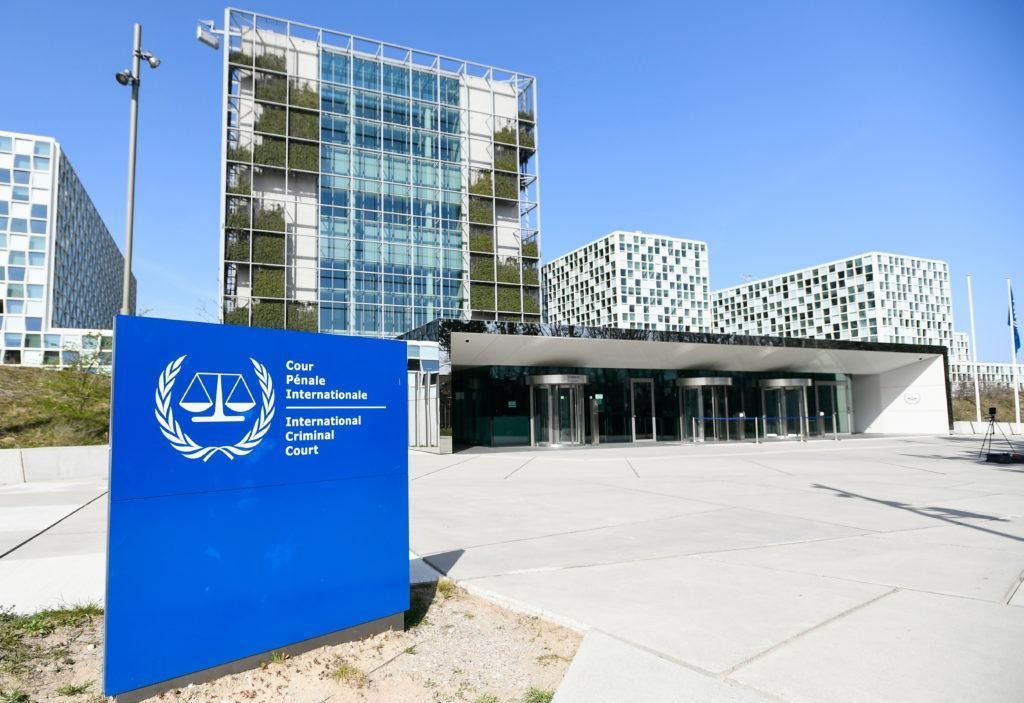
The reality is that international law – in essence, the codification of international norms and standards governed by treaties and international organizations, yet which is only upheld at the willingness of sovereign states to maintain it – has always been applied selectively, and has very rarely enforced justice on those who break it. The United States is the sole nation with the unequivocal economic and military might to enforce rules on other states, and the post-war rules-based order manifested through organizations like the United Nations and the International Court of Justice were in some sense, constructed in its image. Therefore, international justice often hinges on Washington’s participation in its enforcement. Additionally, the United States is not even a signatory to the Rome Statute, the document that established the International Criminal Court, which is the international tribunal that seeks to prosecute individuals guilty of violating international laws like genocide, crimes against humanity, and war crimes. The asymmetry in the enforcement of justice in international law explains why Israel, for example, a key US ally, has never faced any consequences for its well-documented violations of the law, including damning evidence that it is committing genocide in Gaza and their expansion of settlements in the occupied West Bank. Evidently, the United States itself has never faced any consequences when it has broken international law, and in fact, they maintain that under the Hague Invasion Act of 2002, it possesses the authority to free any American citizen detained by the ICC using military force if necessary. This is all to say that international law is not and never has been a binding force, but its existence as convention has at the very least helped shape what is deemed acceptable behaviour by states at the normative level. Thus, international law still serves an important role in maintaining the rules of international affairs and relative peace between nations. However fragile convention may be, it is crucial to preventing the worst manifestations of anarchy as an inherent feature of global politics. Donald Trump took convention, and flushed it down the toilet.
Piroschka Van de Wouw/Reuters
Looking at Trump’s abduction of the leader of a sovereign nation as the end of the end of history is more for the matter of expression than any descriptive fact. Most people would probably cite 9/11 as the true death of the Fukuyaman dream almost 25 years ago, when it became obvious that a unipolar world order would continue to face new challenges arising from its foolishly ignored peripheries. Even then, the 1990s were not a period of peace and optimism unless you were as American-centric as NFL fans guessing the most-watched annual sporting event in the world. The Rwandan genocide demonstrated how devastatingly bloody the impacts of 19th century colonization continued to be, the breakup of Yugoslavia and its ethnic cleansings were a tell tale sign of how nation could continue to triumph over ambitious multinational political projects (perhaps Brussles should have taken notes), and utter chaos in Russia was always sure to produce a strongman that could reinvigorate their national myth and wage relentless disruption towards an apathetic West. History was moving as dynamically as ever, despite the understandable temptation to be Utopian after such a bloody century. Nonetheless, Trump’s breaking with convention and total unwillingness to even pretend that he cares about it, is beyond significant, because the United States is the one that is globally expected to defend it, even hypocritically. The death of convention gives other global powers with acute regional aspirations an unprecedented opportunity and justification to pursue their ends through military force, with not even a slight consideration for international law. After all, if the nation on which international law utterly depends on has chucked it out the window, why should anyone else pretend to care anymore?
TNS
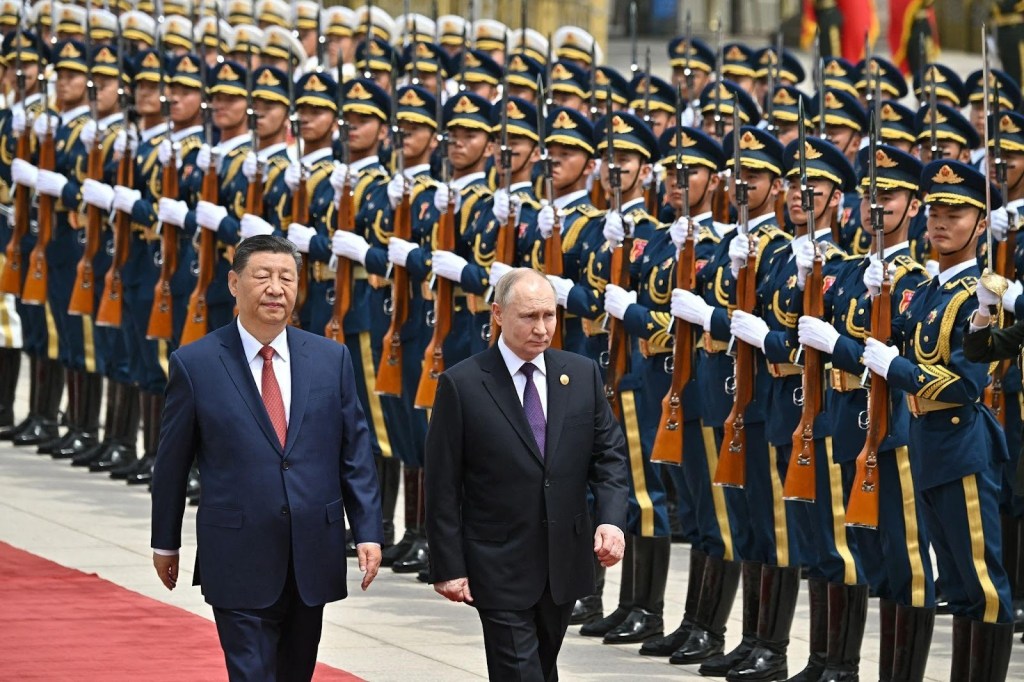
Do not be surprised if, in the remaining years of Trump’s administration, we see the outbreak of regional conflicts across the world. China will most likely launch its long-awaited amphibious invasion of Taiwan. Russia may try to snag the Baltics while NATO distracts itself with a painfully needless immediate buildup in Greenland, truly testing NATO’s Article V once and for all. Tehran and Jerusalem appear just as ready as ever to trade strikes once again, amidst an extraordinary wave of protests across Iran, potentially jeopardizing the ceasefire struck in June and pulling the broader region into a more extended conflict. I say all of this not to be unnecessarily alarmist, but to underline the real risks that Trump’s aggression poses for the carefully intact peace and ceasefires around the world that continue to crack, regardless of foreign policy in Washington. In a sobering truth of what multipolarity may actually look like, it is doubtful that Trump would care all that much if his contemporaries abroad use military means to pursue strategic ends, as long as the United States consolidates authority over its regional interests and his team of staffers and businessmen are set to benefit from the new world order. On the other hand, there is a possibility that the degree to which Trump has been emboldened by his successful invasion of Venezuela means that he sends troops abroad in the case of outbreaks of regional wars in the pursuit of national interests, despite his declared preference for regional spheres of influence over an American internationalist stance The unpredictable nature of Trump’s foreign policy makes it incredibly difficult to guess what global conflict(s) would look like and the role that the United States would play in it. Convention assumes that such conflicts would draw in the United States and thus dissuade actors from aggression; however, we must stomach that these assumptions, from which we enjoyed 80 odd years of relative deterrence between hostile states, are merely that: assumptions, and they seem weaker than ever before. What we may be witnessing is a retraction of the multilateral world order, where power reigns above law, and national interest for the few trumps consideration for the many. Are we brave enough to resist it?
Matt Pindera is a fifth year student, studying International Relations, European Affairs, and History. Currently, he is serving as one of the Co-Heads of Commentary for the Attaché. His topics of interest include tensions between deeper integration and sovereignty in the EU, civil society in the former Eastern bloc, and great power competition in the emerging multipolar world. Outside of studying international politics, in his free time, Matt enjoys playing football/soccer and listening to UK electronic music.
References
1. Coalition for the International Criminal Court. “United States Profile.” https://www.cbc.ca/news/politics/carney-caucus-address-fall-priorities-1.7630250.
2. De Luce, Dan, Courtney Kube, and Gordon Lubold. “Drug Boats from Venezuela Are Mainly Moving Cocaine to Europe—Not Fentanyl to the U.S., Experts Say.” NBC News, November 21, 2025. https://www.cbc.ca/player/play/1882765832.
3. Drug Enforcement Administration. “Facts about Fentanyl.” https://www.dea.gov/resources/facts-about-fentanyl.
4. Felbab-Brown, Vanda, Aslı Aydıntaşbaş, Caitlin Talmadge, Sarah A. Binder, and Scott R. Anderson. “Making Sense of the US Military Operation in Venezuela.” Brookings Institution, January 7, 2026. https://www.brookings.edu/articles/making-sense-of-the-us-military-operation-in-venezuela/.
5. Grant, Will. “US Captures Nicolas Maduro after Strikes on Venezuelan Capital Caracas.” BBC News, January 3, 2026. https://www.bbc.com/news/articles/cpdyvn176lzo.
6. Human Rights Watch. “U.S.: ‘Hague Invasion Act’ Becomes Law.” October 28, 2020. https://www.hrw.org/news/2002/08/03/us-hague-invasion-act-becomes-law
7. Milner, Helen. “The Assumption of Anarchy in International Relations Theory: A Critique.” Review of International Studies 17, no. 1 (1991): 67–85. http://www.jstor.org/stable/20097244.
8. MSN. “Venezuela Plans Guerrilla-Style Resistance If US Launches Attack: Report.” November 2025. https://www.msn.com/en-in/news/world/venezuela-plans-guerrilla-style-resistance-if-us-launches-attack-report/ar-AA1Qi1Pq#:~:text=’Prolonged%20resistance’%20and%20’anarchization,in%20an%20%E2%80%9Canarchization%E2%80%9D%20scenario
9. Shannon, Vaughn. “International Norms and Foreign Policy.” Oxford Research Encyclopedia of Politics. 28 Jun. 2017; https://oxfordre.com/politics/view/10.1093/acrefore/9780190228637.001.0001/acrefore-9780190228637-e-442.
10. United States Department of State. “Nicolás Maduro Moros (Captured).” https://www.state.gov/nicolas-maduro-moros
 The Attaché